Enforcing Digital Copyright Across International Borders: A Practical Guide

Learn how cross-border copyright enforcement works for digital creators, bypassing overseas civil courts with automated fingerprinting and rights management.
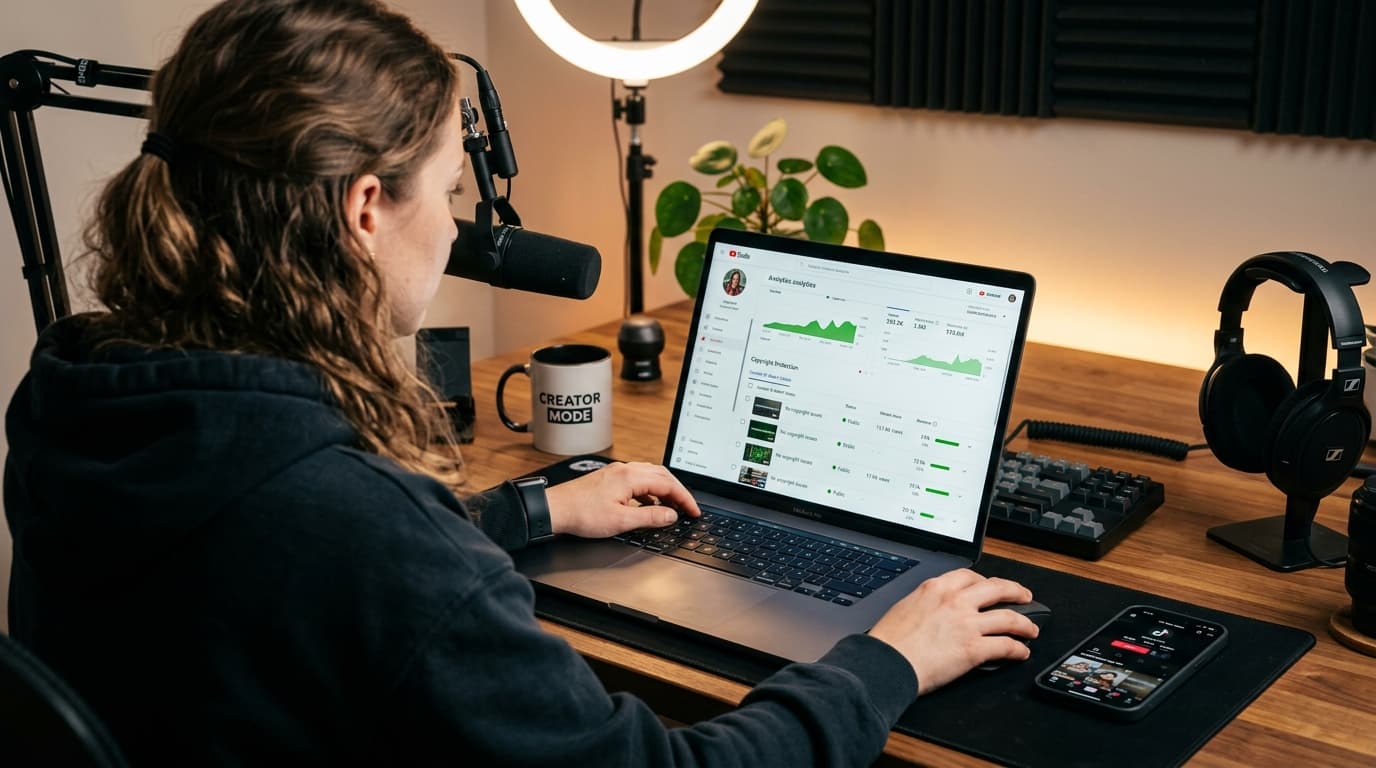
You wake up on a Tuesday morning, check your analytics dashboard, and discover something disturbing: your viral 15-minute documentary has been completely reuploaded by an anonymous channel based halfway across the world. The video has already accumulated two million views, thousands of enthusiastic comments, and substantial ad revenue. But when you investigate the infringing channel, the operator is located in Vietnam, Russia, India, or Brazil.
For independent filmmakers, educators, and digital creators, cross-border piracy has long felt like an unwinnable battle. The prospect of hiring overseas attorneys or navigating unfamiliar foreign court systems is financially impossible. Fortunately, modern digital rights enforcement no longer depends on local civil litigation.
The Reality of Cross-Border Piracy: Why Traditional Litigation Fails
When digital piracy crosses national boundaries, traditional legal mechanisms break down. While copyright law grants automatic ownership upon creation, asserting that ownership across sovereign legal systems is notoriously complex.
The Limits of the Berne Convention in Modern Streaming
More than 180 countries are signatories to the Berne Convention for the Protection of Literary and Artistic Works. Under this treaty, member nations agree to extend the same copyright protections to foreign nationals as their own citizens. On paper, this sounds reassuring. In practice, asserting rights under the Berne Convention requires filing civil claims directly within the infringer's domestic court system.
If a syndication ring in Moscow or Ho Chi Minh City clones your catalog, a domestic cease-and-desist letter carries zero practical weight. Retaining local legal counsel in a foreign jurisdiction can easily cost $20,000 to $50,000 before a preliminary hearing even occurs. For individual digital creators, foreign civil litigation simply is not economically viable.
The Platform-First Alternative: Bypassing Foreign Civil Courts
Instead of fighting multi-year jurisdictional battles in overseas civil courts, smart creators resolve copyright infringement where it actually happens: at the platform infrastructure layer. Modern streaming networks operate unified global architectures that enforce rights regardless of where the uploader physically resides.
Platforms like YouTube and Meta do not require foreign court orders to protect your work. By utilizing enterprise-level automated fingerprinting, original video and audio assets are converted into permanent mathematical reference files.
Whenever an unauthorized channel in Hanoi, São Paulo, or Mumbai uploads your footage, YouTube Content ID and Meta Rights Manager detect the match instantaneously. The system bypasses foreign legal systems altogether by executing programmatic territorial rules directly at the server level. Because algorithmic enforcement operates worldwide in real time, local lawyers are rarely needed.
Step-by-Step International Enforcement Strategy
To construct an airtight global rights perimeter around your media catalog, implement this structured workflow:
- Ingest Master Audio and Visual References: Submit lossless master video files to global rights databases upon publication to establish an incontrovertible timestamp of original ownership.
- Activate Automated Fingerprinting Protocols: Generate high-density acoustic and perceptual video hashes that identify your footage even if pirates mirror the screen, alter playback speeds, or crop borders.
- Deploy Claim-and-Monetize Global Policies: Configure YouTube Content ID and Meta Rights Manager to claim all advertising revenue generated by unauthorized reuploads worldwide, routing payouts straight to your account.
- Maintain an Approved Global Whitelist: Use platform-level whitelisting to safeguard authorized international distribution partners, ensuring legitimate licensing deals continue uninterrupted.
Zero Password Sharing: Protecting Your Account Security
Many creators hesitate to engage external copyright enforcement services out of fear of compromising channel credentials. Giving third-party contractors primary login information creates massive vulnerabilities to phishing, account hijacking, and data breaches.
Enterprise-grade copyright management requires zero password sharing. Through official platform rights delegation and CMS partner assignments, professional rights administrators protect your intellectual property without ever requesting access to your private channel passwords or dashboard credentials.
The CreatorVault Advantage: Effortless Global Ownership
Individual creators rarely qualify for direct enterprise access to YouTube Content ID or Meta Rights Manager on their own. Platforms reserve these high-tier tools for major media organizations with vast catalogs and dedicated legal personnel.
This is where the CreatorVault advantage transforms your operational leverage. Through CreatorGuard, our enterprise infrastructure continuously fingerprints your catalog, automatically detecting unauthorized international reuploads and rerouting pirated revenue directly back into your pocket.
Ready to monetize your international reach further? Pair proactive protection with CreatorScale to license your library across global broadcast networks, or speak with our copyright specialists via CreatorVault Contact to safeguard your digital catalog worldwide today.